Leggi l’articolo in italiano
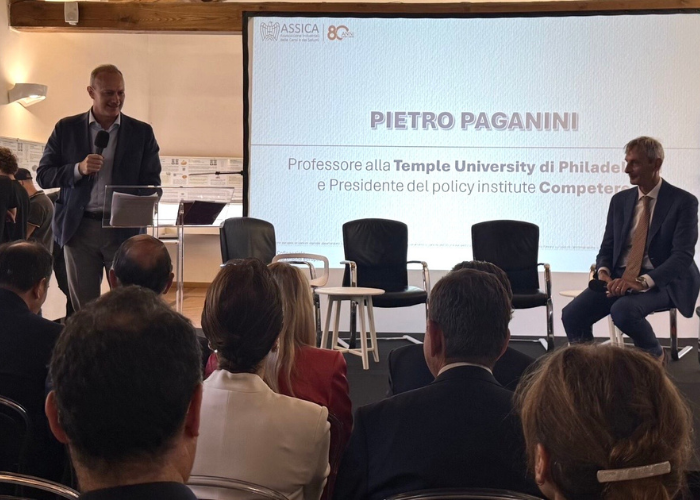
At the 2026 Annual Assembly of ASSICA – the Italian Meat and Cured Meats Industry Association – held in Rome, industry leaders gathered to discuss “The Future of Pork in an Age of Global Uncertainty.”
During the conference, Pietro Paganini highlighted how the pork and cured meats industry is undergoing a profound transformation that extends far beyond traditional food competition. Today, the sector is being reshaped by evolving consumer behaviors, sustainability demands, technological innovation, and rapidly changing global dynamics – redefining the future of food production and agri-food leadership.
Explore key policy takeaways from the event in our summary report and read Pietro’s speech: download it now.

- Food security must become a permanent part of the European debate on strategic autonomy: Europe has learned to speak the language of energy security, defense, technology, semiconductors, critical raw materials, and pharmaceutical supply chains. It must now recognize food security as another pillar of its resilience.
- Animal proteins are part of a balanced food security strategy: pork and cured meats, within a dietary model based on variety, portion, frequency, and quality, contribute to nutrition, employment, local territories, exports, productive culture, and crisis response capacity.
- Sustainability must become measurable performance, not ideological narrative: environment, climate, water, land, biodiversity, circularity, and animal welfare must be addressed through data, innovation, investment, and proportionate regulation, avoiding simplifications and carbon tunnel vision.
- Public policy should enable innovation, not replace business: Companies can invest, measure performance, reduce impacts, and improve processes, but they need stable, technologically neutral, proportionate, and predictable rules.
- The future of food requires protein coexistence, not protein wars: food security cannot be built by opposing animal and plant proteins, tradition and innovation, or health and pleasure. It is built through plurality, balance, responsibility, freedom of choice, and knowledge.
- The value of the supply chain must be recognized, not only demanded: consumers and regulators ask for greater sustainability, traceability, safety, quality, and accessibility. Every expectation comes with a cost. If value is not recognized, the supply chain weakens and price becomes the only visible signal.
- The sector must move from defensive communication to strategic leadership: the challenge is not only to respond to criticism, but to lead a new public conversation about food security, nutritional balance, measurable sustainability, innovation, and Italy’s agri-food Made in Italy system.
Overall, the future of the pork and cured meats sector will not belong to those who resist change, but to those who are ready to lead it.
The real challenge is no longer choosing between tradition and innovation, but proving that the two can evolve together. From protein coexistence to smarter food policies, the future of the sector will be shaped by balance, scientific openness, quality, and freedom of choice.
At a time of profound global change, the industry faces a defining opportunity: remain defensive, or lead the transition toward a more resilient, sustainable, and globally competitive food system.