
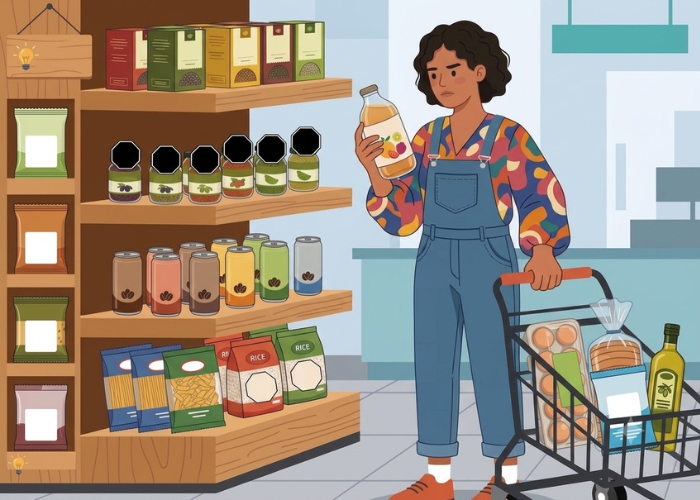
Ex-Ante has published a commentary by Pietro Paganini on one of the most controversial public health policies of the last decade: front-of-pack warning labels and sugar taxes. Chile was the first country in the world to adopt black warning labels. Almost a decade later, it can ask a more ambitious question: What comes next?
Read the full article on Ex-Ante or find a summary below.
Key Takeaways
- Chile’s warning-label model needs reassessment: evidence suggests that front-of-pack warning labels and sugar taxes have had limited impact on obesity and chronic disease outcomes, raising questions about the effectiveness of one-size-fits-all regulatory tools.
- Health is individual, not standardized: Dietary responses vary widely based on genetics, metabolism, lifestyle, income, and environment, meaning that labels, taxes, and bans cannot fully capture how people actually make food and health decisions.
- The future of prevention is personalized and digital: AI, wearables, behavioral data, and precision nutrition enable a shift from paternalistic regulation to empowerment, education, and personalized prevention strategies that support healthier choices in real life.
Chile was one of the first countries in the world to introduce black front-of-package warning labels on a range of products deemed by regulators to be “high in” (sugar, sodium, saturated fats, etc.), alongside sugar taxes as tools to address obesity and non- communicable diseases.
At the time, this approach was presented as bold, simple, and effective, with the aim of quickly informing consumers, discouraging the consumption of certain products, and requiring companies to reformulate their products.
More than a decade after the adoption of these policies, Chile has both the opportunity and the responsibility to take a more ambitious look at whether this has been the best path and model, at least from a public health perspective, and in terms of addressing the challenges it set out to tackle in the future.
Evaluating and asking questions does not mean denying the complexity (and impacts) of obesity, cardiovascular diseases, or diabetes. On the contrary, precisely because these conditions are complex, public policy must go beyond simplistic tools. Warning labels and sugar taxes belong to a regulatory era based on standardisation: the same message, the same signal, the same penalty for everyone. But human health does not work that way.
People respond differently to food depending on metabolism, genetics, age, physical activity levels, sleep, stress, microbiome, income, habits, and lifestyle. The same product can therefore have different effects on different individuals and contexts. A healthy diet is not built by avoiding a single nutrient or by fearing a label or warning symbol. It is built through balance, variety, portion size, frequency, physical activity, and informed and responsible choices.
For this reason, more than a decade after the adoption of these public policies, Chile should not only evaluate them but, from there, take a leading role in a renewed effort—rather than reinforcing an outdated paternalistic model that has not fully achieved its stated goals—by opening a new generation of prevention policies. A government that trusts individuals, supports entrepreneurship, and believes in market-driven innovation should ask how policy can empower citizens to make better decisions, rather than treating them as passive subjects to be warned, taxed, corrected, or told what to eat and what to avoid.
The future of prevention is personalisation. Artificial intelligence, wearable devices, digital health tools, genetic insights, behavioural data, and precision nutrition are now making it possible to support individuals based on their own needs, risks, and lifestyles. This is already transforming medicine, sport, nutrition, and wellbeing.
Technology can also become an extraordinary educational tool: accessible, continuous, and adapted to real life. This matters because education has too often been the missing investment in public health. It requires time, effort, repetition, and even failure. Instead, governments and international organisations have often preferred the shorter—but more illusory—path of warning labels, taxes, and bans that may appear decisive, but rarely lead to real understanding or lasting results.
Chile, open to innovation and digital transformation, can become a pioneer of this new approach. Instead of relying mainly on black warning labels and punitive taxes, it could promote, from a health, science, technology, and education perspective, tools that help citizens understand their energy balance, improve diet quality, increase physical activity, monitor sleep, and adapt their choices to their personal conditions.
This does not mean abandoning public health. It means pursuing it in a smarter, more balanced, and more effective way.
Read Beyond Nutritional Paternalism: Towards Affordable and Heart-Friendly Diets >>>