
- BOOK · FOOD, FREEDOM & CHOICE
iFood: How to Escape Food Ideology
A critical exploration of universal diets, food standardization, and paternalistic policies, advocating science, diversity, innovation, and consumers’ freedom to choose.
Nutrition · Food Policy
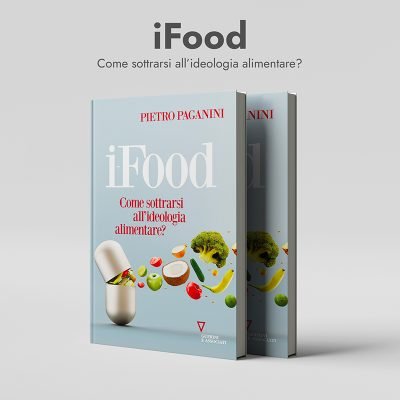
iFood
Pietro Paganini
An elite coalition is pushing for the adoption of a “Universal Diet.” This book debunks paternalistic policies and defends consumer freedom of choice against forced uniformity. Published by Guerini e Associati.
What Is Happening
We are facing a serious nutritional crisis driven by excessive calorie intake, manifesting in obesity, non-communicable diseases, and a range of conditions with dramatic and costly consequences for society. Closely connected to climate change and our tendency to exploit ecosystems, this problem continues to intensify.
An elite coalition comprising public officials, scientists, activists, and philanthropists is advocating the adoption of a “Universal Diet”, also known as a planetary diet. Artificially designed for the entire global population, this dietary model is promoted through targeted taxes, labeling systems, campaigns against industrial and ultra-processed foods, coordinated communication strategies, and narratives that sometimes verge on propaganda.
Why It Matters
The shift toward a Universal Diet has significant implications. Although it may appear to offer an effective solution, the emerging policies are increasingly authoritarian and could have dangerous consequences for citizens. They threaten freedom of choice while promoting standardized consumption.
This “iPhonization” of nutrition, creating food designed to appeal to everyone through a centralized production system, limits diversity and inhibits innovation.
Although attractive to some large corporations, the Universal Diet threatens consumers, competition, and the market as a whole. Its risks are numerous and significant:
- Restriction of freedom: A standardized diet is imposed with the promise of environmental and health benefits, while disregarding individual characteristics and the right to choose what, how, and when to eat.
- Forced uniformity: Dietary and cultural diversity are placed at risk. Individual tastes and preferences are replaced by a “universal flavor”, threatening the survival of local food traditions.
- Inhibition of knowledge: Paternalistic policies fail to promote consumer education, slowing the spread of knowledge. Consumers are expected to accept what is imposed through simplified messages.
- A deterministic and dogmatic approach to science: Science is presented as monolithic and unquestionable, rejecting experimentation and open scientific debate.
- Suppression of innovation: If a “perfect diet” controlled by a small number of multinational corporations were established, the food industry could lose its incentive to innovate and develop new products.
What We Should Do
Health and nutrition policies should reflect the diversity and unique characteristics of every individual. They should be grounded in science and protect freedom of choice, rather than relying on universal solutions imposed from above.
Public decision-makers, scientists, and civil society must avoid becoming closed ideological groups and keep the debate open. Public policies should recognize the complexity of malnutrition, prioritizing education and safeguarding consumers’ freedom to make informed choices.